
European Investment Bank (EIB) Opens Its €100 Billion War Chest—Literally
Europe doubles down on strategic autonomy as EIB Group unleashes record €100 billion to fortify defence, power resilience, and tech innovation.
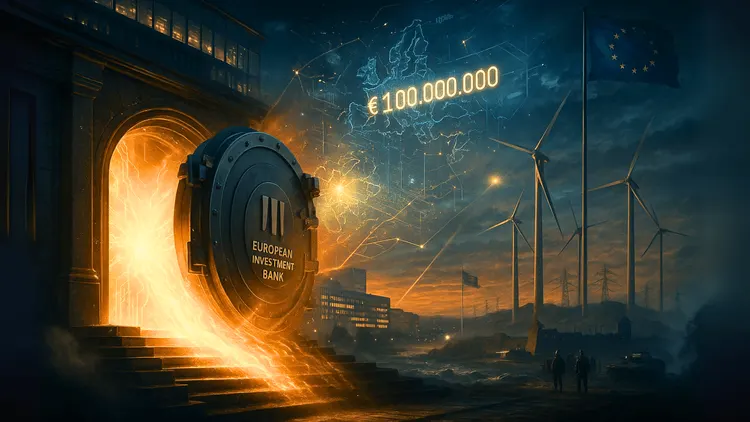
In a resounding show of unity and ambition, the European Investment Bank (EIB) Group has raised its 2025 financing ceiling to an unprecedented €100 billion, with a bold mandate to reinforce European security, energy independence, and technological competitiveness. Endorsed unanimously by the 27 EU Member States, the record-breaking figure reflects an urgent recalibration of European priorities as the continent faces rising geopolitical uncertainty, energy volatility, and intensifying global competition in critical technologies.
The increased ceiling marks a defining moment for the EIB Group, transforming it into one of the most powerful levers for Europe’s strategic agenda. The decision, ratified by the EIB Board of Governors in Luxembourg, puts Europe’s investment arm at the center of the EU’s response to a rapidly evolving global landscape. This is not just an economic commitment but a geopolitical statement, signaling Europe’s determination to take control of its own future.
EIB Group President Nadia Calviño made the stakes clear. “The unanimous support of our shareholders for record financing shows the key role of the EIB Group in supporting Europe’s strategic priorities,” she said. “In a world where everything everywhere is changing all at once, the EU is a beacon of clarity, confidence and stability.” Her words capture the spirit behind the move, which blends financial muscle with political resolve.
At the heart of this expanded investment framework is a newly intensified focus on European security and defence. For the first time, 3.5 percent of the EIB’s total financing will be dedicated to the sector. This is a striking evolution for an institution once reluctant to engage with military-linked projects. A prime example is the approval of a landmark military base project in Lithuania that will support a German Bundeswehr brigade and strengthen NATO’s regional posture. This isn’t just a financial transaction, it’s a symbol of Europe’s growing security autonomy.
Yet defence is only part of the story. The EIB is also investing more than €11 billion into upgrading Europe’s power grids and energy storage systems. These funds are critical to improving the resilience of Europe’s electricity infrastructure and integrating growing volumes of renewable energy into the grid. With the continent still recovering from energy shocks and supply disruptions, these investments are essential to safeguarding affordability and reliability for both households and businesses.
One of the EIB’s most ambitious initiatives is the launch of the TechEU programme, which stands as Europe’s largest financing platform for innovation. Set to deploy €70 billion over 2025 to 2027, TechEU aims to attract capital, talent, and private investment to elevate Europe’s technological prowess. It’s not a modest undertaking. From supercomputing and artificial intelligence to digital infrastructure and advanced materials, the initiative covers virtually every frontier technology deemed vital for Europe’s future sovereignty.
TechEU is also designed to plug financing gaps that often prevent startups and scale-ups from maturing into global players. In close alignment with the European Commission’s Startup and Scaleup Strategy, TechEU provides equity, quasi-equity, loans, and guarantees to support high-risk, high-potential innovators across all development stages. The ripple effect is expected to crowd in private investments of at least €250 billion, making it one of the most significant innovation multipliers Europe has ever seen.
In support of the EU Clean Industrial Deal, the EIB has rolled out a slate of new instruments under the TechEU umbrella to promote cleantech growth. These include a €1.5 billion package for grid component manufacturers, a €500 million pilot to support corporate power purchase agreements, and a €250 million CleantechEU guarantee scheme targeting green-tech SMEs. The EIB also announced a €1.5 billion top-up to its successful programme backing European wind turbine and component makers. These instruments aim to strengthen the supply chains underpinning Europe’s energy transition and reduce reliance on volatile global markets.
Another key figure in this new chapter is Czech Finance Minister Zbyněk Stanjura, who takes over as Chair of the EIB Board of Governors. His message was clear: the EIB is no longer just a bank, it’s an engine of European strategy. “I look forward to working closely with President Calviño and other EU Finance Ministers to support the EIB, as it steps up its activities to help tackle the many challenges Europe is facing,” he said. Outgoing Chair Temenuzhka Petkova of Bulgaria also commended the EIB’s performance during a turbulent geopolitical year, underscoring the institution’s rising importance in delivering not only economic growth but geopolitical stability.
The numbers tell a powerful story. In 2024 alone, the EIB Group signed nearly €89 billion in new financing for over 900 projects. Around 60 percent of those investments supported climate action and sustainability, while nearly half were focused on cohesion regions, helping bridge the economic gap across the EU. Now, with a €100 billion ceiling in 2025, the bar has been raised again.
This week’s board meetings also resulted in €12.8 billion in new operations approved by the EIB and EIF. These include three solar photovoltaic plants in Romania, water infrastructure upgrades in Ireland and the Netherlands, grid expansions in Germany, and education investments in Finland. But the impact goes far beyond Europe’s borders. The EIB is backing renewable energy in Colombia, water transport in Nigeria, and sanitation projects in Tanzania. The EIF, meanwhile, is deepening partnerships with export credit agencies and Ukrainian banks to help rebuild and finance Ukraine’s wartime economy. Its latest moves include new guarantee transactions with the German export credit agency and Ukrainian banks to support over 1,500 businesses. These measures build on a similar partnership signed with Denmark in May.
The EIB Group is also pumping capital into infrastructure funds that will back next-generation data centers, wireless networks, shipping decarbonization, and student housing. Taken together, these investments reflect the Group’s strategic pivot from simply financing projects to actively shaping Europe’s competitiveness in a fractured world.
From an operational standpoint, the institution is evolving. It’s no longer just a long-term lending bank focused on bricks and mortar. It is fast becoming a dynamic financier of Europe’s strategic autonomy, capable of driving capital into both steel and silicon. Whether it’s helping a Ukrainian entrepreneur keep the lights on, or funding offshore wind platforms that power Europe’s clean future, the EIB is stepping into roles once thought reserved for states.
The €100 billion milestone isn’t just a number. It’s a message to the world. Europe is not standing still. It’s mobilizing. It’s investing in its own resilience, its own security, and its own technological edge. While the world fractures and rival blocs compete for dominance, the EU is anchoring its future with capital, clarity, and cooperation. In the face of disorder, the EIB Group is emerging as the continent’s most consequential investor and perhaps its most underrated strategic asset.
Conclusion
As global tensions rise and competition for resources, talent, and influence intensifies, the European Investment Bank Group is stepping decisively into the breach. With a record €100 billion financing ceiling for 2025, the EIB is doing more than funding infrastructure. It’s backing the soul of Europe’s strategic independence. From defense readiness and energy grids to startup ecosystems and global partnerships, the EIB Group is delivering not only capital but confidence. This isn’t business as usual. This is Europe, investing in itself.