
Congress to consider marijuana reform in spring
Bipartisan momentum for cannabis reform
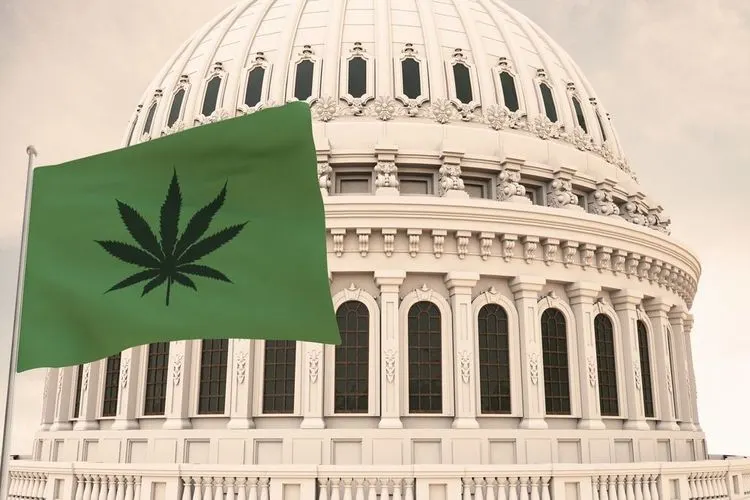
Democrats in Congress are preparing for a full package of initiatives aimed at decriminalizing marijuana that they intend to implement this spring.
The federal proposals aim to bring 21st century banking services to the nearly $ 18 billion industry and clear the criminal records of thousands of marijuana offenders.
"The growing bipartisan momentum for cannabis reform shows that Congress is poised for progress in 2022, and we are closer than ever to aligning our cannabis policies and laws with the American people," said Rep. Earl Blumenauer (D -Oreas). Earl Blumenauer (D-Ore.) And Barbara Lee (D-Calif.) Wrote a memo to the Congressional Cannabis Caucus on Thursday.
Nearly 70 percent of Americans - including about half of Republicans - support marijuana legalization, the memo said, citing a 2020 Gallup poll. Five states joined recreational cannabis legalization in the past year - New Mexico, New Jersey, Virginia and Connecticut - as well as a plethora of political ideas "in Congress aimed at ending the cannabis ban," lawmakers said.
The memo is a roadmap for dozens of draft laws aimed at redefining the role of the federal government in every aspect of the cannabis industry, with some actions gaining the backing of the GOP.
Bills such as the Marijuana Opportunity Reinvestment and Expungement (MORE) Act, backed by Lee and Blumenauer, aim to remove cannabis from the Controlled Substance Act and erase the records of people convicted of using marijuana.
Other bills would encourage the development of a legal cannabis market in Washington D.C. Enable, enforce the legality of government cannabis programs and the ability to apply them to federal employees, and allow research into cannabis for the treatment of PTSD, while prohibiting retaliation by the veterans agency against doctors recommending the substance.
Another major bill, the SAFE Banking Act by Rep. Ed Perlmutter (D-Colo.), Would give the cannabis industry access to a range of financial services such as business loans, checking accounts, and credit card processing.
"Under current law, financial institutions that provide banking services to legitimate and licensed cannabis companies under state law are subject to criminal prosecution under several federal acts, such as' aiding and abetting '' a federal crime and money laundering," Perlmutter said in a statement to the bill.
This has forced the cannabis industry in most of the states where it is legal to do business almost entirely in cash - which run into the billions of dollars - leading to the occasional high-profile robbery and murder.
Then there are bills such as the two-party law on medical marijuana research, supported jointly by Blumenauer and MP Andy Harris (R-Md.). The move would lift restrictions on federal researchers studying marijuana "and ensure researchers have access to the same high-quality product that consumers use," the press release said.
Taken together, the draft laws show in broad outline what a liberalization policy for marijuana could look like: a modern, diverse, regulated industry with small producers - not dominated by giants like alcohol and tobacco.
"For states making progress on cannabis reform, we need to ensure that access to the growing cannabis industry is fair," the memo said. "In addition to investing in the communities hardest hit by the war on drugs, it is critical that states promote equal opportunities for participation in the cannabis industry, especially for people of color.
This coincides with statements from senators like the majority leader Charles Schumer (D-N.Y.). "We don't want the big boys to come in," Schumer told former New York MP Tremaine Wright in a panel discussion for the Black Enterprise news agency.
Given the long history of unequal enforcement of cannabis crimes "in communities like the one you represent in Brooklyn, which is where I'm from, it doesn't make sense for the big boys to come and make all the money," Schumer said.
The Senate plans to consider the bill this spring, according to Tom Rodgers of Carlyle Consulting, a lobbyist for cannabis legalization and Native American civil rights who is in contact with Schumer's office.
"We're going to have a big debate on cannabis next year, and they want that debate to be held before the mid-term elections," Rodgers said, adding that "virtually every committee in the Senate will receive a portion of this bill," including those committees that do deal with banking and criminal justice reform.
As House and Senate Democrats seek sweeping legislation, Rodgers said one element has been left out of the discussion: protecting Native Americans who use medical marijuana on tribal land.
A household in the land of Picuris Pueblo, New Mexico was raided by agents from the Bureau of Indian Affairs in November. They confiscated an estimated annual supply of marijuana from a man enrolled in the state medical marijuana program, The Associated Press reported.
A similar raid would not have been possible on non-Native American land, Rodgers said, because of New Mexico's medical marijuana program. Another measure by Blumenauer and MP Tom McClintock (R-Calif.), First passed by the House of Representatives in 2019 as part of the Grants Act, also prohibits any funding from the Justice Department for the enforcement of marijuana laws that violate the state's marijuana law.
A new version of the bill clarifies that it also applies to Native American tribes, meaning that marijuana markets run by tribes like the Oglala Sioux on Pine Ridge would be given the same powers as surrounding states.
But those amendments leave a huge loophole, Rodgers says, leaving Native American consumers and business owners vulnerable. The Bluemenauer changes only relate to actions by the Department of Justice, which delegates its powers to the states, according to Rodgers. The Bureau of Indian Affairs is subordinate to the Home Office, and the tribal areas it administers are federal - "domestic dependent nations," as the law has long termed it.
"Native Americans - First Americans - do not want to be treated unequal, unfavorably and disproportionately again when it comes to the application of this country's laws and services," Rodgers said.
Much of the pressure for reform comes from both sides. On Thursday the Reps. Dave Joyce, R-Ohio and Don Young, R-Alaska wrote to Biden and Vice President Harris urging a change in the strictness with which cannabis is listed or "classified" under federal controlled substances law to distinguish it from "far more dangerous drugs like fentantly, morphine, methadone and cocaine".
The restrictions imposed by marijuana being a Schedule 1 drug, Joyce said, "puts the United States way behind many of our international partners and scientific competitors," from Ireland and the UK to South Korea and Israel.
"In the interests of researchers, health professionals, and patients in the United States who continue to lose access to life-saving therapies and data every day that #cannabis remains overcontrolled," Joyce wrote on Twitter, "I'll keep asking."