
Can America Afford to Rely on China for Critical Minerals?
A Trade Win Masks a Deeper Dependency Dilemma
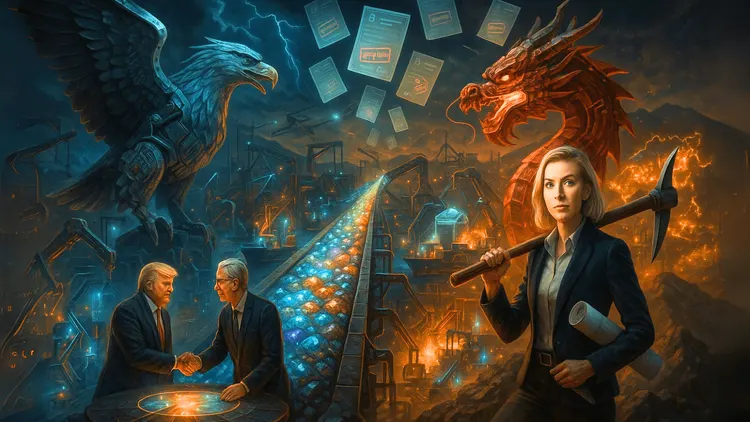
Buckle up: the U.S. and China just sealed a trade deal to unlock the flow of rare earth minerals and magnets, those unsung heroes powering everything from electric cars to microchips. U.S. Treasury Secretary Scott Bessent dropped the news on June 27, 2025, touting smoother access to supplies that China had throttled in retaliation to steep U.S. tariffs. But while this agreement might keep factories humming for now, sharp minds like Ashley Zumwalt-Forbes are waving a red flag: leaning on Beijing’s supply chain is a high-stakes gamble for America’s industrial edge.
The deal, inked earlier this week, sprang from a high-level phone call between President Donald Trump and Chinese President Xi Jinping, with negotiators ironing out the fine print in London. On Fox Business Network’s Mornings with Maria, Bessent crowed, “Tariffs are coming down, and rare earth magnets are starting to flow back to the U.S.” These materials, critical for cars, wind turbines, and cutting-edge tech, had been snarled by China’s April 2025 permitting rules, which slapped a 45-day delay on exports. Commerce Secretary Howard Lutnick, speaking to Bloomberg TV, confirmed the deal’s signing, signaling a cooling-off in the trade war that’s been shaking both economies.
This pact builds on a framework hashed out in London, following Geneva talks in May that dodged massive tariff hikes. China’s Commerce Ministry said it would “review and approve eligible export applications” while the U.S. agreed to ease some restrictions on Chinese goods. But here’s the kicker: China’s keeping its permitting process, giving it the power to loosen or tighten the reins at will. Sun Yun, director of the Stimson Center’s China program, nailed it: “If U.S.-China ties go south, say over Taiwan arms sales, those permits could disappear faster than a bad blind date.”
The economic fallout is real. The U.S. economy contracted at a 0.5% annual pace from January to March 2025, partly as firms rushed to stockpile imports before Trump’s tariffs kicked in. In China, factory profits plunged over 9% year-on-year in May, with automakers hit hardest. The deal also follows China’s moves to regulate fentanyl precursor chemicals, addressing Trump’s push to stem the flow to Mexican cartels—though 20% tariffs tied to the issue, part of a broader 30% on Chinese goods, still stand.
Cue Ashley Zumwalt-Forbes, a U.S. critical minerals guru whose LinkedIn post slices through the diplomatic hype with surgical precision. She warns that this deal doesn’t just postpone the problem—it hands China more control over America’s supply chain. “This doesn’t build new capacity. It delays it. It doesn’t reduce dependence. It deepens it,” she wrote, spotlighting the peril of relying on a supplier that can cut off exports on a whim. Zumwalt-Forbes earns a standing ovation for her clarion call: the U.S. and its allies must ramp up domestic rare earth production to safeguard industrial might and national security. Her insight is a vital reminder that homegrown critical minerals are non-negotiable for the West to thrive in a turbulent world.
With U.S. officials like Lutnick hyping “deal after deal” with nations like India, the vibe is upbeat. But as Zumwalt-Forbes sharply notes, banking on China’s rare earths is less a win and more a wake-up call. If America wants to flex its industrial muscle, it’s time to dig in—literally—at home.