
BMO’s Brian Belski Brushes Off Tariff Panic, Doubles Down on Canadian Stocks
Despite Trump’s tariff pressure, BMO’s Brian Belski urges investors to stay the course with Canadian quality stocks—and ignore the panic.
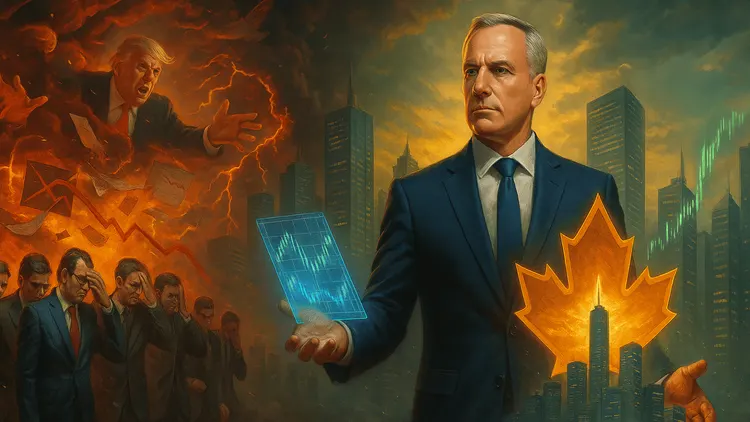
BMO’s Brian Belski isn’t rattled. While Canadian companies issue downbeat 2025 forecasts and pull guidance altogether, citing escalating uncertainty from Donald Trump’s latest tariff blitz, Belski is doubling down on optimism. To him, the bearish tone sweeping across Bay Street is nothing more than a panic-driven overreaction to the kind of headline risk that’s best ignored. “Unsubstantiated noise,” he calls it—rhetoric and emotional knee-jerks that have bullied analysts, executives, and market watchers into unjustified negativity.
On May 8, President Trump launched his so-called “Liberation Day” policy—an aggressive new wave of tariffs targeting global trade partners. The move reverberated through Canadian boardrooms with a chilling effect. Spin Master yanked its 2025 guidance. Air Canada dialed back its forecasts. Rogers and A&W echoed similar caution. But for Belski, this caution is exactly where the opportunity lies. He sees this moment not as a warning sign but a buying signal. According to him, history is on the side of those who can stomach short-term volatility and take the contrarian route when others panic.
Even with his characteristically bullish stance, Belski did revise his 2025 year-end target for the S&P/TSX Composite index downward by 7 percent. But he called it a “minor tweak”—hardly a surrender to bearish momentum. His reasoning is anchored in earnings revision trends, which, though now trending negative, had remained flat for most of the year. To Belski, the recent shift is more of a sentiment swing than a fundamental flaw. That’s why he’s urging investors to tune out the noise and refocus on Canadian quality.
In his latest client note, Belski argues that weak guidance is not a reason to abandon the Canadian market. Instead, he believes it represents a proven contrarian indicator—a setup for gains once the dust settles. Canadian equities, he insists, are still filled with opportunity, especially among high-quality names that have seen less momentum in earnings revisions recently. In Belski’s view, this softening in sentiment is a gift for discerning investors who can see past the macro chatter.
The Canadian market reacted positively to news of a 90-day tariff truce between the U.S. and China, with the TSX gaining 174 points on Monday. It held those gains through a quiet Tuesday session. But the broader unease hasn’t vanished. The trade war is far from over, and Canadian firms remain in the crosshairs of global uncertainty. Still, Belski believes investors shouldn’t anchor their strategy to guidance slashed under duress. After all, forecasts made during chaos tend to overstate the risk.
Air Canada: A Victim of Trade Shock, Not Weak Fundamentals
Air Canada slashed its 2025 guidance amid rising jet fuel costs and worries about cross-border tariffs disrupting travel and logistics. But Belski believes the company remains structurally sound, with travel demand still resilient and a strong balance sheet to absorb temporary pressures. For long-term investors, he sees any dip as more signal than noise—a moment to evaluate entry points, not abandon ship.
Spin Master: Tariff Drama Clouds a Creative Powerhouse
Toronto-based toy maker Spin Master made headlines when it withdrew its 2025 forecast, citing global tariff volatility. While analysts took the move as a red flag, Belski interprets it differently. The company’s core strengths—intellectual property, licensing deals, and a track record of innovative hits—haven’t changed. For contrarian investors, this pullback might be setting the stage for a comeback once tariff uncertainty clears.
Rogers Communications: Static in the Forecast, Not the Fundamentals
Rogers joined the chorus of caution, but Belski sees its consumer base, infrastructure moat, and potential synergies from Shaw integration as long-term positives. The noise around short-term capex guidance and wireless margin pressures doesn’t change the underlying story: Rogers remains one of Canada’s telecom titans with room to grow once the tariff tantrum settles.
TD Bank: Watch the Guidance, Trust the Core
As the first major Canadian bank set to report, TD is expected to echo cautious tones around 2025. But even with potential soft language in earnings calls, Belski believes the bank’s diversified operations and exposure to U.S. markets give it resilience others lack. Guidance may falter, but TD’s fundamentals remain firm—and that's what long-term investors should focus on.
Belski is not alone in seeing risk in the near term. RBC Capital Markets analyst Darko Mihelic issued a note warning that upcoming bank earnings could contain cautious language for both 2025 and even 2026. That’s hardly surprising. The Canadian banking sector, always seen as a bellwether for broader economic sentiment, is facing a complicated backdrop. But Belski argues that’s no reason to run. On the contrary, Canada’s financial giants are exactly where he sees some of the best opportunities.
In fact, nine of the 27 stocks featured in his latest screen of high-quality Canadian companies come from the financial sector—the largest category by far. He believes these firms, with strong fundamentals and broad economic exposure, are best positioned to weather the short-term noise and emerge stronger once trade tensions fade or are repriced. Belski’s approach is unapologetically pragmatic: ignore the drama, lean into the data, and back businesses with strong balance sheets and resilient earnings power.
For Belski, the current moment is a textbook test of investor psychology. With sentiment souring, earnings estimates sliding, and analysts sounding alarms, the contrarian investor must stand firm. He believes too many are being spooked by Trump’s tariff theatrics, failing to distinguish between political posturing and long-term economic impact. To him, Canada remains a fundamentally solid market with companies worth holding—and buying—amid the noise.
As Canada’s big banks prepare to roll out earnings, starting with TD Bank this Thursday, all eyes will be on their forward guidance. Will more firms echo the cautious tone of the past few weeks? Likely. But if Belski is right, that’s not a reason to retreat. It’s the moment to sharpen your focus and stay true to your thesis. High-quality names don’t become low-quality overnight. And when fear dictates pricing, those willing to act can find real value.
BMO’s chief strategist is issuing a challenge—to stop reacting, start thinking, and remember that in the world of investing, short-term fear often sets the stage for long-term reward. If you’ve got the patience, conviction, and courage to bet on Canadian resilience, Belski believes the coming months could offer one of those rare contrarian windows the markets only open for those paying attention.
Conclusion
While Trump’s tariffs and the resulting corporate guidance downgrades have spooked much of the Canadian market, Brian Belski sees it all as temporary turbulence. Instead of fleeing, he’s advocating a strategic pivot—ignore the fear, target quality, and ride out the storm. It’s a classic contrarian call, backed by data, historical patterns, and a deep belief in the resilience of Canadian firms. In times like these, the market doesn’t reward panic—it rewards clarity. And for Belski, clarity means focusing on high-quality companies that others are overlooking.