
AI-Powered Exploration Reveals Zambia's Hidden Copper Wealth
Unveiling a Game-Changing Copper Discovery in Zambia, Powered by AI Technology
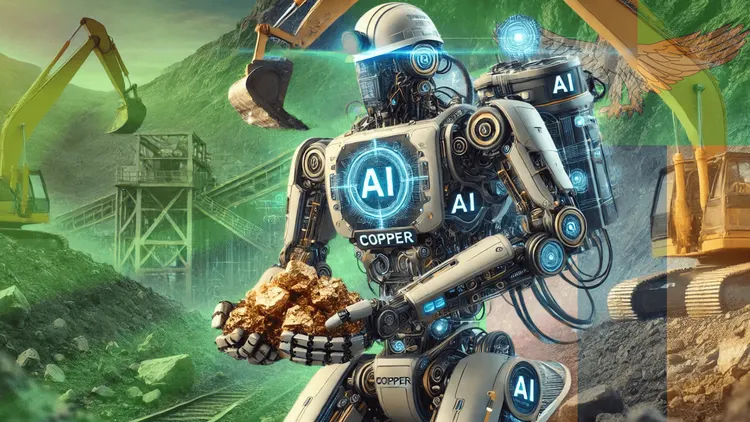
In a groundbreaking development, an extraordinary copper lode has been uncovered deep beneath the Zambian bedrock. The discovery, hailed as the largest in over a decade, promises to reshape the global supply chain for critical minerals. This monumental find is the result of an innovative blend of artificial intelligence and traditional mining techniques, spearheaded by KoBold Metals.
KoBold Metals, a Silicon Valley-backed company, revealed that their advanced A.I. technology pinpointed a rich copper deposit capable of producing at least 300,000 tons annually. This discovery not only signifies a technological leap but also underscores the strategic importance of securing critical minerals in an era of heightened geopolitical tensions.
How AI Revolutionized Mineral Exploration
The traditional mining industry has long relied on methods that are both time-consuming and costly. From manual surveys to exploratory drilling, the process has remained largely unchanged for decades. Enter AI: a game-changer that has revolutionized mineral exploration by drastically reducing the time and cost involved in discovering new deposits.
AI's ability to analyze vast amounts of geological data quickly and accurately is its most significant advantage. By using machine learning algorithms, AI can identify patterns and anomalies in data that human geologists might miss. This precision not only speeds up the discovery process but also reduces the environmental impact by minimizing unnecessary drilling.
The Technology Behind the Discovery
At the core of KoBold's success are its advanced AI algorithms. These algorithms process geological, geophysical, and geochemical data to create detailed 3D models of underground mineral deposits. By integrating various data sources, AI can predict the location of high-grade ore with remarkable accuracy.
In addition to AI, KoBold employs cutting-edge tools like muon detectors. These devices identify muons, subatomic particles that penetrate deep into the Earth, providing density readings of underground formations. This technology, originally used to explore Egyptian pyramids, now helps pinpoint rich mineral veins in places like Zambia.
Who is KoBold Metals?
KoBold Metals was founded with the mission to revolutionize mineral exploration using AI. Backed by major investors like Bill Gates and venture capital firm Andreessen Horowitz, KoBold aims to secure the raw materials essential for the tech industry and the global energy transition.
Key figures in KoBold's journey include its CEO and co-founder, Kurt House, and investors like Sam Altman of OpenAI. These visionaries recognize the critical role of minerals like copper, cobalt, lithium, and nickel in powering everything from smartphones to electric vehicles.
The Discovery Process
KoBold's journey to discovering the copper lode in Zambia began with extensive data collection. Using satellite imagery, geological surveys, and historical mining records, the team compiled a comprehensive dataset. AI algorithms then analyzed this data to identify promising locations.
After identifying potential sites, KoBold's team conducted on-ground exploration to verify the AI predictions. This included drilling exploratory holes and using muon detectors to confirm the presence of copper. The results exceeded expectations, revealing one of the largest copper deposits in recent history.
Unveiling the Copper Lode
The copper deposit is located in Zambia's Copperbelt Province, a region already known for its rich mineral resources. What sets this find apart is its depth and concentration, making it a highly valuable discovery in the global mining industry.
According to KoBold's estimates, the mine is expected to produce 300,000 tons of copper annually, worth billions of dollars. This production rate could continue for decades, significantly boosting the supply of copper needed for various industries.
Economic Impact
The discovery holds immense value for Silicon Valley, which relies heavily on copper for electronic devices and data centers. With a stable supply of copper, tech giants can continue to innovate and expand without facing material shortages.
The economic benefits extend beyond Silicon Valley. The copper mine will create jobs and boost the local economy in Zambia. However, ensuring that the benefits reach the local communities remains a challenge that KoBold must address.
The US-China Rivalry
The geopolitical significance of this discovery cannot be overstated. As the US and China compete for dominance in the tech and energy sectors, securing a reliable supply of critical minerals like copper is essential for national security.
In response to China's control over global mineral supply chains, the US government is investing in projects like KoBold's to reduce dependency on foreign resources. This includes financing infrastructure projects to support the mining industry in Africa.
Global Supply Chain Dynamics
The global demand for minerals like copper, cobalt, lithium, and nickel is skyrocketing. These materials are crucial for manufacturing batteries, renewable energy systems, and electronic devices. Ensuring a steady supply is vital for economic stability and technological advancement.
Zambia's Copperbelt Province is poised to become a significant player in the global mineral market. The country's rich deposits, coupled with AI-driven exploration, position it as a key supplier of the minerals needed for the energy transition and tech industry.
Environmental Impact of Mining
Mining operations, especially large-scale ones, have a significant environmental footprint. KoBold Metals is committed to sustainable mining practices that minimize ecological damage. This includes using advanced technologies to reduce waste and lower carbon emissions.
Zambia's history with mining has left environmental scars, including polluted rivers and deforested areas. KoBold aims to mitigate these impacts by implementing rigorous environmental standards and working closely with local communities to restore affected areas.
Social Impact and Community Benefits
The discovery of the copper lode has the potential to uplift local communities by creating jobs and improving infrastructure. KoBold has pledged to invest in local development projects, including schools, healthcare facilities, and clean water initiatives.
Zambia has a long history of exploitation by foreign mining companies. KoBold's commitment to fair practices and community engagement is crucial in ensuring that the benefits of the copper mine are shared equitably with the Zambian people.
Future Prospects and Challenges
With the initial discovery confirmed, KoBold faces the challenge of scaling up operations to full production. This involves securing additional investment, building infrastructure, and negotiating partnerships with contractors and the Zambian government.
KoBold plans to begin production in the early 2030s, with the mine expected to operate at full capacity within a few years. The company is working on an accelerated timeline to meet the growing demand for copper.
Overcoming Challenges
Mining at such a large scale presents numerous technical and logistical challenges. KoBold must navigate complex geological formations, secure reliable transportation routes, and ensure the safety of its workers.
Zambia's political and economic stability is critical to the success of the mining project. KoBold must work closely with the Zambian government to address regulatory issues, ensure fair compensation, and support local development initiatives.
Conclusion
KoBold Metals' discovery of a vast copper lode in Zambia represents a significant breakthrough in mineral exploration. Leveraging AI and advanced technologies, the company has uncovered a valuable resource that will benefit both the tech industry and the global energy transition. However, the journey from discovery to full production is fraught with challenges, including environmental concerns and the need for equitable distribution of benefits. As KoBold navigates these complexities, the future of mining looks increasingly promising, driven by innovation and a commitment to sustainable practices.